Accessible Yoga Alignment for Beginners Made Clear
Accessible Yoga Alignment for Beginners Starts With Choice
A cue to "square your hips" can sound simple until your body does not feel square, your balance changes, or the shape asks for more than you want to give. Accessible yoga alignment for beginners begins with a different promise: you do not need to make your body match a picture to practice yoga well. You can learn what a posture is asking for, notice what you feel, and choose a version that supports steadiness, breath, and self-trust.
Alignment can be useful. It can help us organize a shape, reduce unnecessary strain, and understand how a movement travels through the body. But when it becomes a set of rigid rules, it can leave beginners feeling corrected, watched, or as though they have failed before they have had a chance to learn. A supportive practice makes room for real bodies, real histories, and changing needs from one day to the next.
What Alignment Is Actually For
Yoga alignment is not about achieving a universal shape. Bodies differ in bone structure, joint range, strength, injury history, mobility, and nervous-system capacity. Two people can practice the same pose with care and look very different.
Instead of asking, "Am I doing this perfectly?" try asking whether the pose helps you feel stable enough to breathe and present enough to notice yourself. Alignment offers information, not a verdict. It can point you toward a more sustainable experience, but you remain the expert on what is happening in your body.
For beginners, a helpful alignment approach usually has three priorities: creating enough stability to feel supported, reducing sensations that feel sharp or alarming, and leaving room for the breath. If a position creates pinching, numbness, dizziness, or pain, that is useful feedback. You do not need to push through it to earn the benefits of yoga.
Accessible Yoga Alignment for Beginners Starts With Choice
Choice is not an extra feature of an accessible class. It is part of the practice. You might choose to take a smaller range of motion, use the wall, place a blanket under your knees, or rest instead of continuing a sequence. Each option can be a skillful response rather than a lesser version of yoga.
Consider a standing forward fold. Some students can comfortably reach the floor, while others feel pulling in the hamstrings, low back, or back of the knees. Bending the knees generously, resting hands on blocks, or placing hands on thighs can bring the ground closer and reduce the demand. The intention is not to force straighter legs. It is to find a fold in which the spine, breath, and balance have support.
In a trauma-informed setting, language matters as much as the shape. Invitations such as "you might explore," "if that feels supportive," and "you can stay where you are" reinforce autonomy. They also help students learn to pause and assess instead of automatically complying with every cue. This is especially valuable for people who have learned to disconnect from their own signals in order to keep up.
Begin With Your Foundation
Many alignment cues become clearer when you start from the places meeting the floor or another source of support. In standing poses, notice the contact of your feet with the mat. Rather than trying to press every inch down equally, explore whether your weight feels mostly in the heels, outer feet, or toes. Letting the feet have a wider, more natural stance may make balancing easier.
In hands-and-knees positions, comfort at the wrists is not guaranteed. You can place hands on blocks, lower to forearms, make fists, or practice at a wall. Bringing the floor up is a practical modification, not a shortcut. If your wrists are tender, forcing weight into them can distract from the rest of the practice.
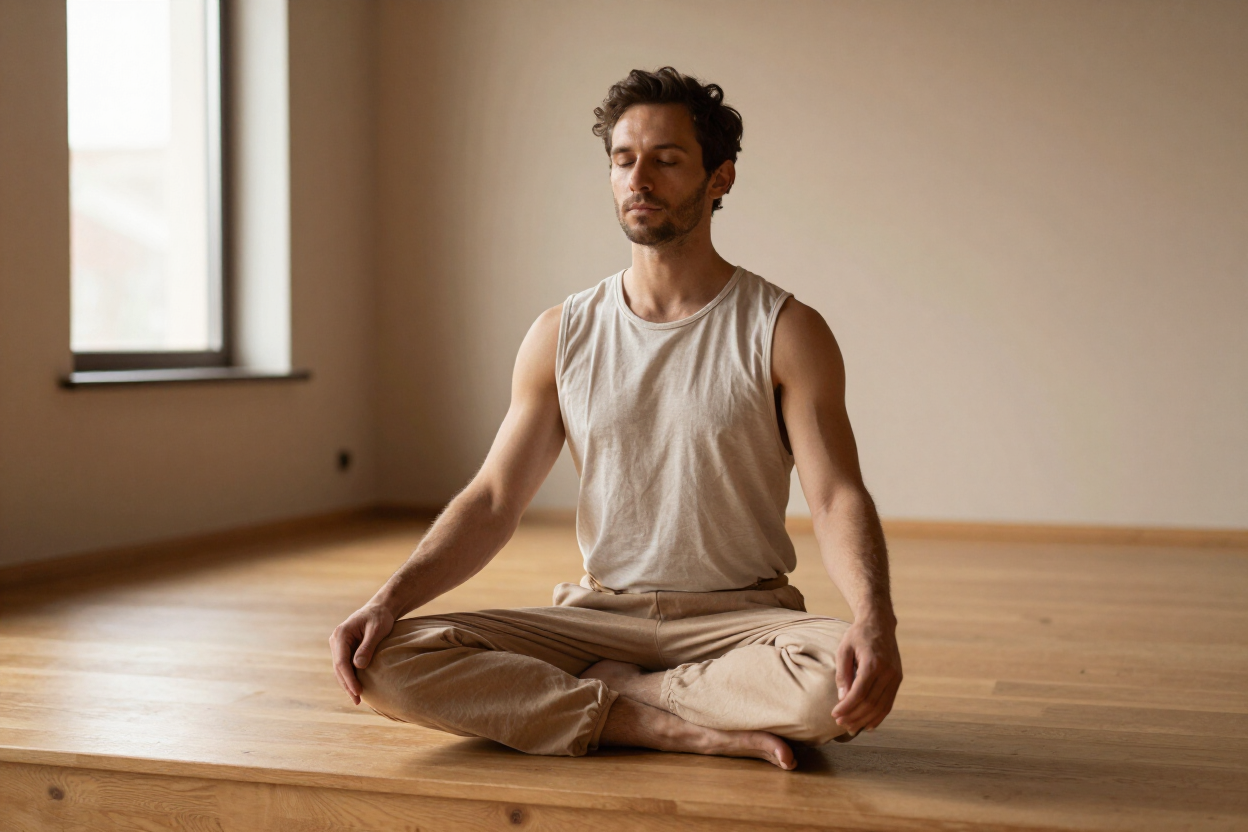
In seated poses, the pelvis often needs more height than we expect. Sitting on a folded blanket or firm cushion can help the hips tip forward slightly and make it easier to sit without collapsing or straining. If cross-legged sitting is uncomfortable, stretch the legs out, sit in a chair, or lie down. Yoga does not require one seated position.
Let Props Support the Purpose of the Pose
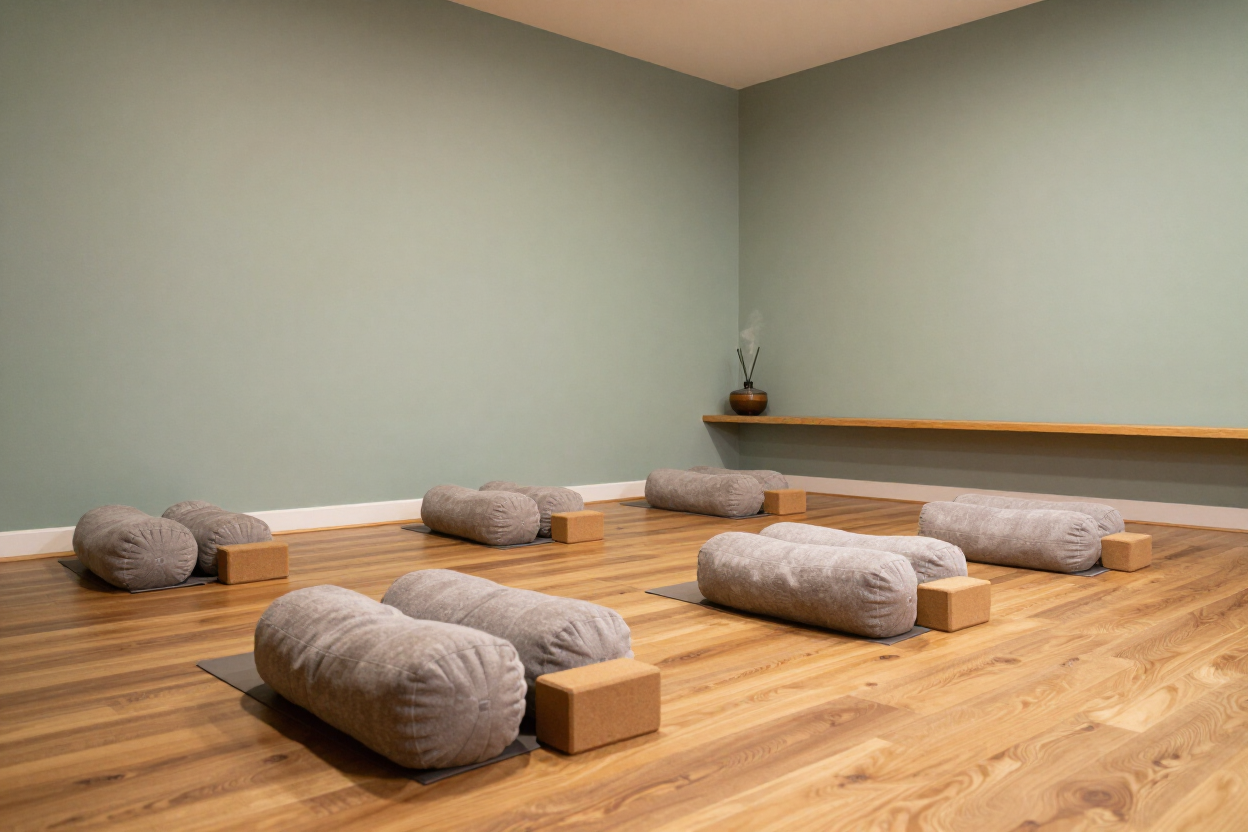
Props help translate a pose to the body you have today. They are not signs that you are inflexible or inexperienced. A block can shorten the distance between your hand and the floor. A strap can extend your reach without requiring your shoulders or hamstrings to overwork. A blanket can soften pressure at the knees, hips, or head.
The best prop setup depends on the purpose of the posture. In Triangle Pose, for example, placing a block under the lower hand can help you lengthen through both sides of the waist without collapsing toward the floor. In Bridge Pose, a block under the sacrum can offer a supported, restful variation, while a block between the thighs may provide feedback about leg engagement. Neither choice is automatically better. They create different experiences.
It is also okay to decide that a pose is not supportive today. Child's Pose is often offered as a resting shape, but it can feel restrictive in the knees, hips, chest, or breath. Resting on the back, sitting upright, or taking a few slow steps can be a more genuine rest.
Use Sensation as Information, Not a Challenge
Some sensation is normal when you move in unfamiliar ways. You may feel muscular effort, mild stretching, warmth, or the wobble of learning balance. Pain, sharpness, tingling, numbness, breath holding, or a feeling of panic are different signals. Pause, come out, and choose another option.
This distinction takes practice because yoga culture has sometimes praised endurance without enough attention to consent and individual capacity. Beginners may assume discomfort is proof that a pose is working. It is not that simple. A pose can be demanding and still feel workable. It can also be gentle and still bring up a strong emotional response.
If you feel overwhelmed, orient to the room. Notice a color, a sound, or the support beneath you. Open your eyes if they were closed. Take a neutral position such as standing, sitting, or lying down with bent knees. Regulation is part of yoga practice, not an interruption to it.
A Few Common Poses, Made More Available
Downward-Facing Dog often gets treated as a basic pose, but it asks a great deal of the wrists, shoulders, hamstrings, and nervous system. Bend the knees, shorten the stance, place hands on a wall, or practice a tabletop position instead. A wall version can offer many of the same lengthening and strengthening qualities with less weight bearing.
In Warrior II, let the stance be shorter than you think it should be. A very wide stance can make the hips and knees work harder than necessary. Turn the front knee in the same general direction as the toes, but do not force it into a particular angle. If the shoulders fatigue, place hands on hips rather than holding the arms out.
For twists, lengthen first and rotate second. Sitting on a blanket, bending one or both knees, or using a chair can make a twist more comfortable. The goal is not to turn as far as possible. It is to create a manageable rotation while the breath remains easy.
For Teachers: Teach the Person, Not the Ideal Shape
Aspiring teachers often inherit alignment language that sounds precise but does not account for variation. Cues such as "feet parallel," "hips square," or "shoulders down" may be helpful for some students and unhelpful for others. Before offering them as rules, consider the intention. Are you trying to create balance, reduce compression, offer more support, or prepare for a transition?
Then offer an experiment instead of a command. You might say, "Try softening your front knee and notice whether your low back has more space," or, "If your shoulder feels pinchy, lower the arm or bring your hand to your hip." This approach builds student agency while still giving clear, practical guidance.
At Yoga Soul Wellness Center, this kind of teaching is part of developing professional confidence: learning anatomy and technique while staying responsive to the human being in front of you. Strong teaching is not measured by how many corrections you give. It is measured by whether students have enough clarity, choice, and care to participate safely.
Practice the Skill of Listening
Accessible alignment is a relationship with your body, not a checklist to complete. Some days you may explore a fuller expression of a pose. Other days, the most aligned choice may be a chair, a wall, a prop, or rest. Capacity changes with sleep, stress, injury, grief, energy, and experience.
You do not need to have everything figured out to begin. Let your practice be a place where curiosity matters more than performance, where adjustments are allowed, and where listening to yourself is recognized as a form of strength.
Recent Posts